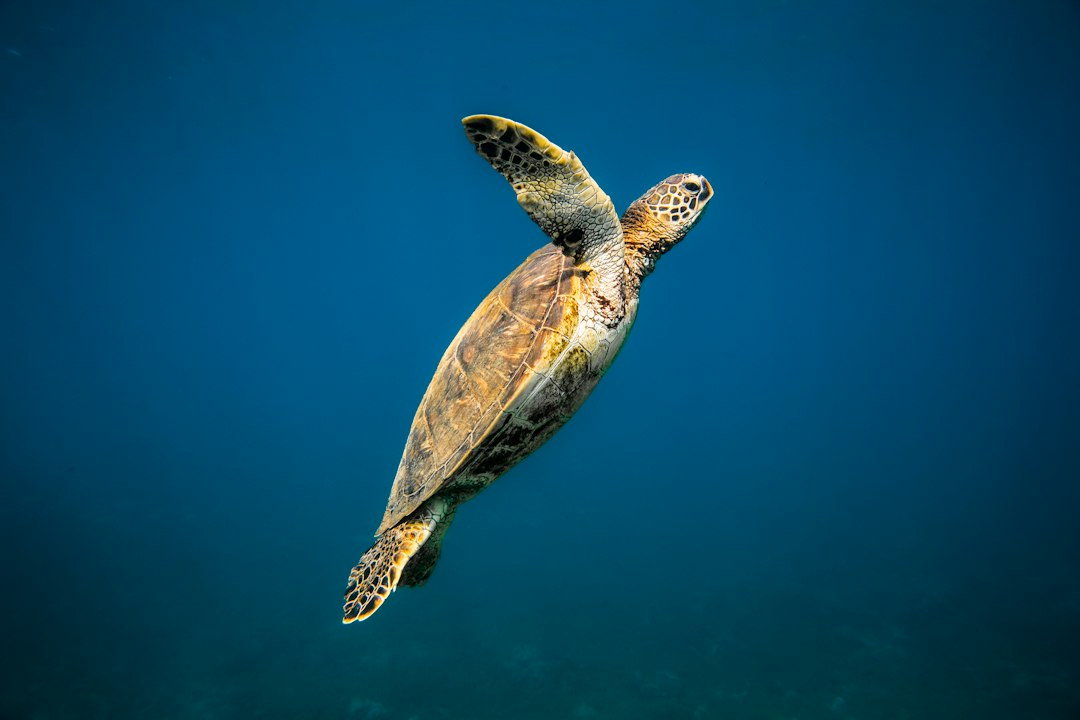
A wildlife encounter is most rewarding when the animal can continue what it was doing. A resting turtle, a feeding manta or a distant whale is not a performance for visitors. Plan to watch quietly, use a zoom or binoculars and accept that you may not see the species you hoped for.
Hawaii’s guidance includes both recommended minimum distances and legal approach restrictions. Follow any larger on-site barrier or instruction, and never move closer just because someone else has done so.
Cover photo: Honu in Kapalua Bay, Maui. Observe turtles from a distance. Photo: Jake Houglum / Unsplash.
Plan at a glance
| Animal | NOAA guidance | Meaning for the visitor |
|---|---|---|
| Sea turtle | Recommended viewing distance: at least 10 feet / 3 meters | Give a resting or swimming turtle space and a clear path. |
| Hawaiian monk seal | Recommended: at least 50 feet / 15 meters | Remain outside protective barriers and avoid disturbance. |
| Seal mother and pup | Recommended: at least 150 feet / 45 meters | Give this pair substantially more space. |
| Hawaiian spinner dolphin | Legal restriction: do not swim with, approach or remain within 50 yards | Do not pursue an encounter in a resting bay. |
| Humpback whale in Hawaiʻi | Legal approach limit: at least 100 yards | Use a responsible operator and observe from a distance. |
Let resting animals rest
Turtles and monk seals may appear on beaches used by visitors, but the beach does not become a petting area. Stop well back, follow barriers and keep others from crowding the animal. Leave its route to the water open. Dogs, noise and a circle of photographers can be disturbing even when no one touches the animal. A longer lens gives a better memory without changing the animal’s behavior.
Choose dolphin and whale activities carefully
Avoid activities framed around entering the water to pursue spinner dolphins. Their protected space is not a challenge for a skilled swimmer to negotiate. For a boat-based wildlife trip, ask how the crew follows the relevant approach rules and responds when animals move toward the vessel. The operator’s behavior matters more than promises of close photographs or an unusually dramatic encounter.
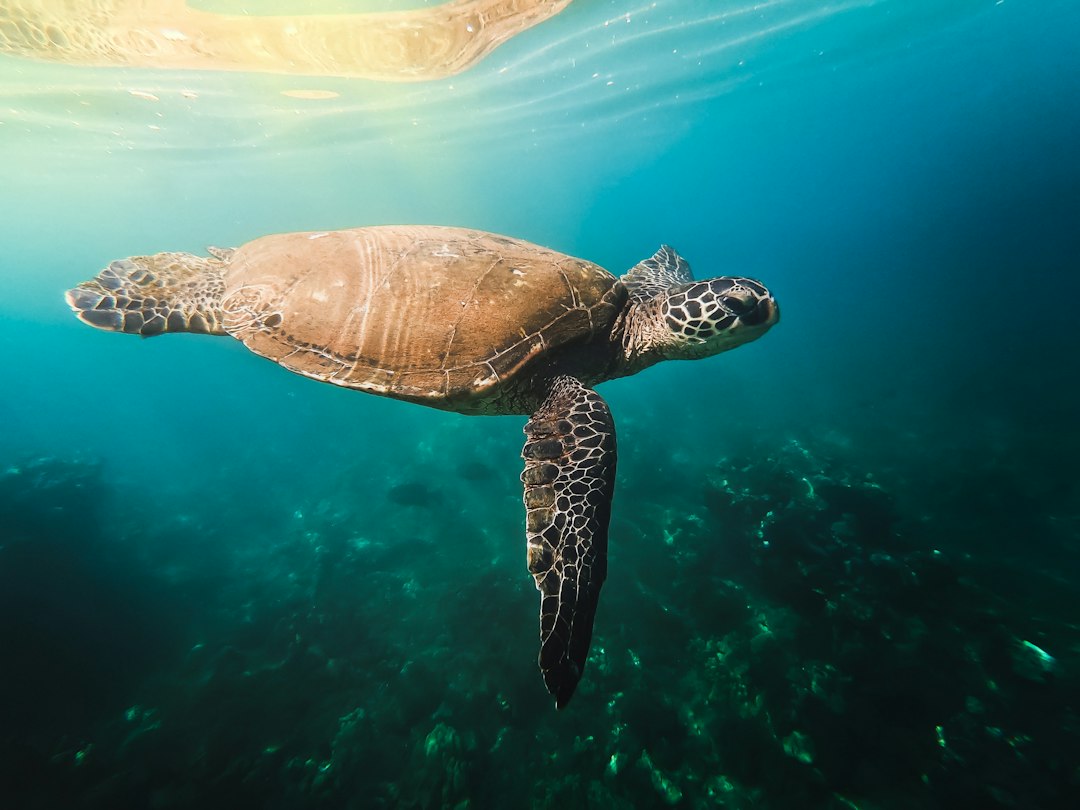
Observe turtles in the water without following them
If a turtle appears during a suitable snorkel, remain calm and give it room. Do not touch its shell, block it at the surface or follow it for a video. Stay aware of your own position, companions and the shore rather than focusing so completely on the animal that you lose track of the conditions. Marine life can be enjoyed through observation without making it the target of the swim.
Understand manta observation as a guided activity
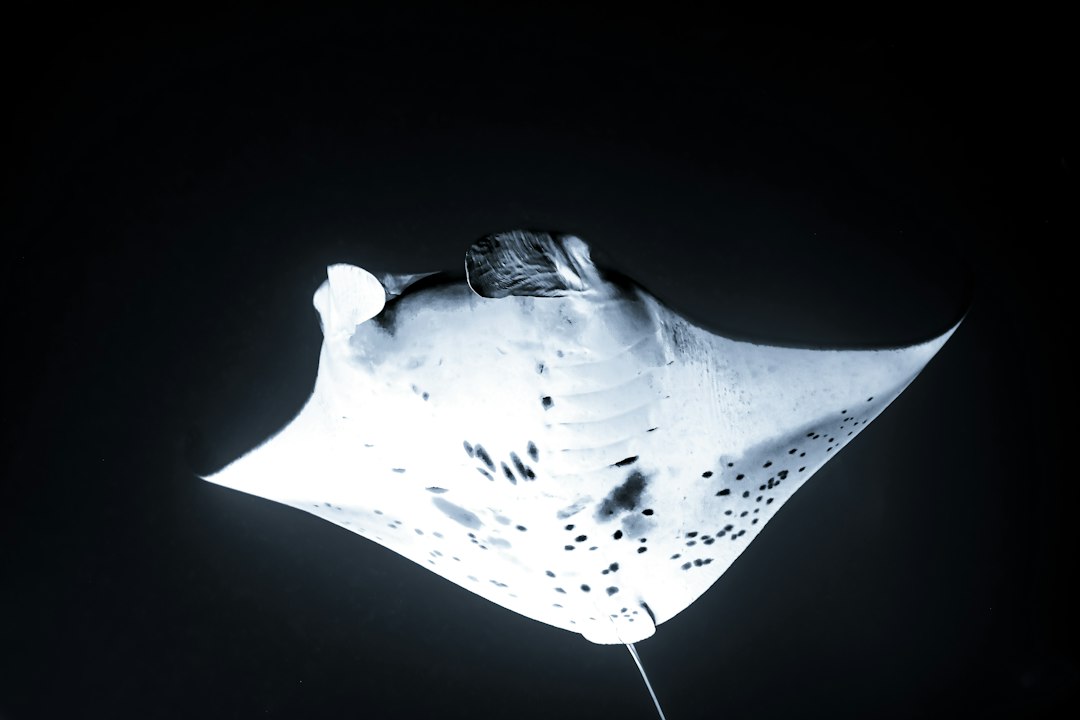
Kona’s night manta excursions use specific operating arrangements. Follow the chosen provider’s requirements, position and equipment instructions, and keep hands away from the animals. A wildlife photograph cannot show whether an excursion is suitable for a particular swimmer. Companions may prefer a different evening plan, and the group should not pressure anyone into an ocean activity for the sake of a shared picture.
Build an outing that works without a sighting
Choose a beach, coastal walk or boat trip that offers a setting and experience you would enjoy even if the animal does not appear. Punaluʻu’s black sand and Poʻipū’s coast are worth appreciating without promising turtles or seals. The photos here span different islands, identified in their captions. Keep the island and access arrangements clear when deciding where to go; wildlife can never be booked into a precise place and time.
Practical checklist
- Use the larger of official guidance, on-site barriers and staff instructions.
- Never touch, feed, chase or surround wildlife.
- Use binoculars or zoom instead of moving closer.
- Keep an animal’s route to the water clear.
- Choose responsible operators and avoid guaranteed-close-encounter claims.
Frequently asked questions
Are all the distances in the table laws?
No. The table distinguishes NOAA’s recommended viewing distances from the legal spinner-dolphin and humpback-whale approach limits. Other protections against harassment also apply.
Where can we guarantee seeing a turtle?
Nowhere should be presented as a guaranteed wildlife appointment. Choose an appropriate coastal outing and treat a respectful sighting as a possibility.
Choose a home for this itinerary
Choose the home for its layout and location. Dolphin- or whale-themed wording is not a promise of a wildlife encounter.
- Dolphin Bay Estate: main house and cottage, air conditioning, kitchen, workspace. Check this home on Airbnb.
- 3-Bedroom Ocean View Pool Home: private pool, ocean-view lanai, air conditioning. Check this home on Airbnb.
Home facts are sourced from Airbnb; review the current listing, guest limit, house rules and full price for your dates before booking.
Official information for planning this outing
- Marine wildlife viewing in Hawaiʻi — NOAA Fisheries
- Beach selection and ocean guidance — Hawaiʻi Department of Health
Use these sources for current access, schedules, participation requirements and fees. Conditions can change after publication.
Visitor-information sources: NOAA Fisheries: Viewing Marine Wildlife in Hawaiʻi; NOAA Fisheries: Hawaiian spinner dolphin approach rule; NOAA Fisheries: humpback whale viewing guidance. Research reviewed September 27, 2026. Opening, fees, reservations and access can change; confirm the current arrangements with the named organization.